
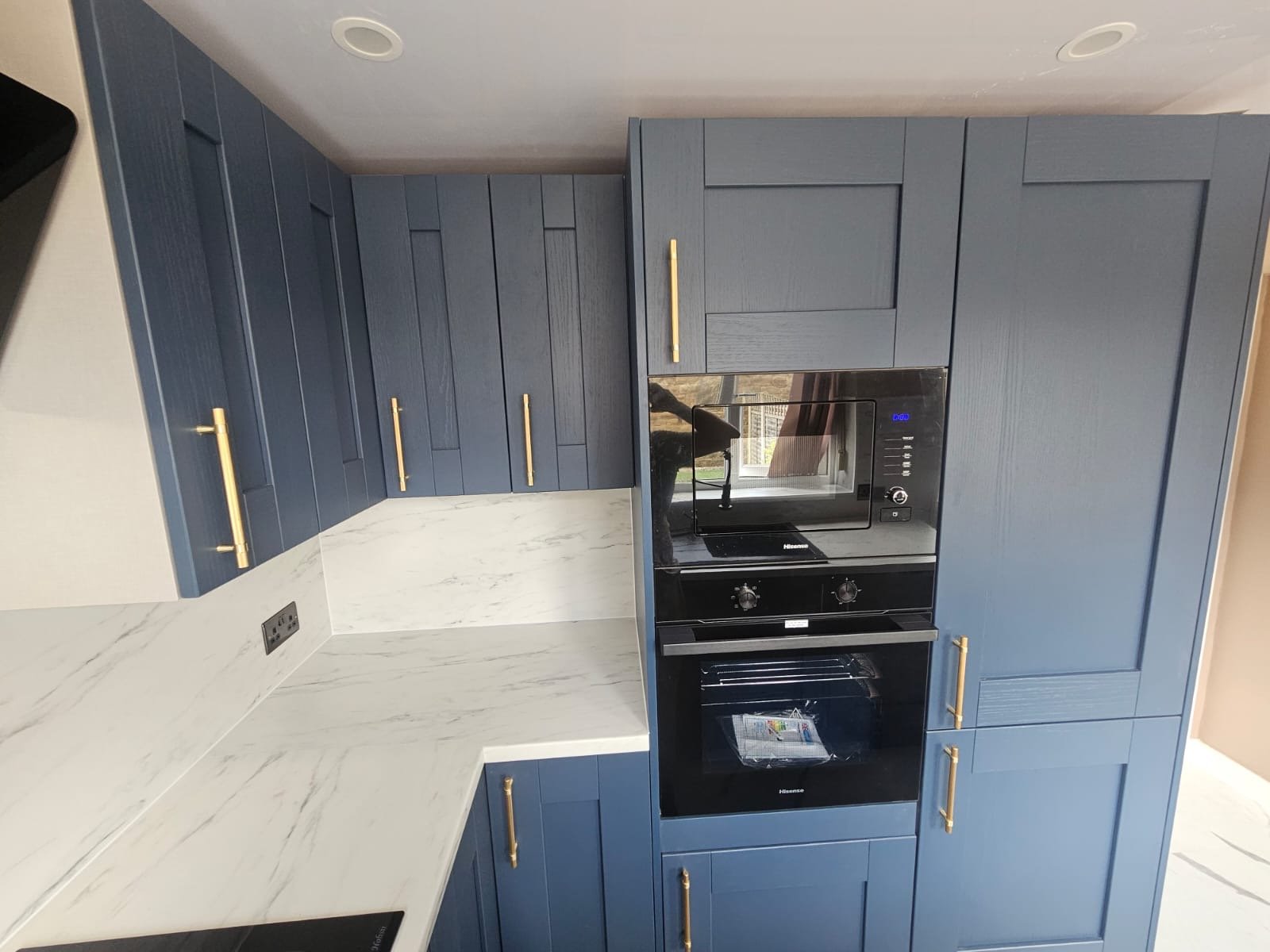
Kitchen storage works best when it follows frequency of use. Everyday cookware, food, cleaning products and small appliances should each have a logical home near the activity they support.
Kitchen storage works best when it follows frequency of use. Everyday cookware, food, cleaning products and small appliances should each have a logical home near the activity they support.
Wide drawers can make pans, plates and dry goods easier to see than deep shelves. Internal dividers help, but only after the drawer sizes reflect the items being stored.
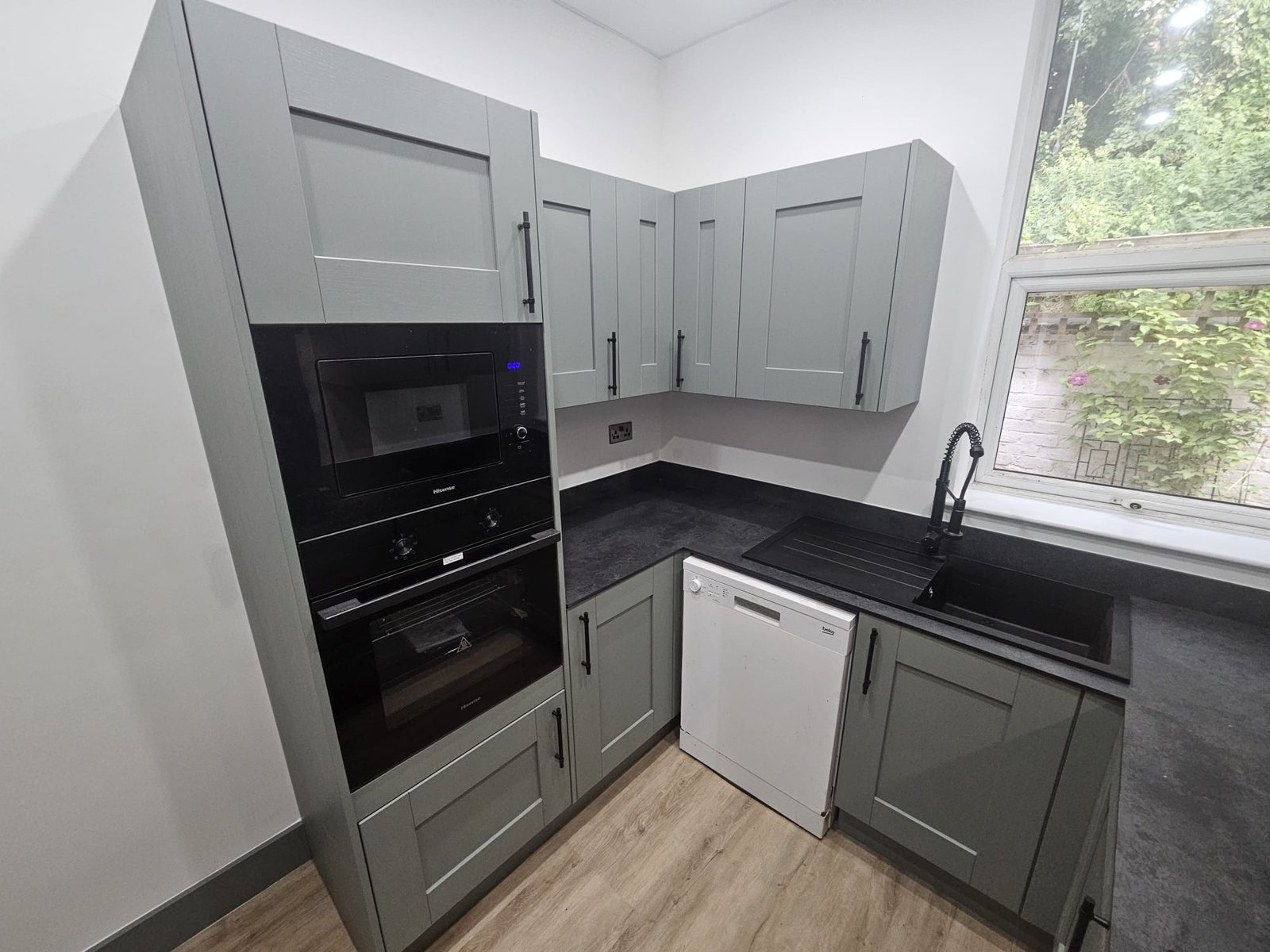
Larder units and appliance towers add capacity, but too many can reduce worktop and make a room feel top-heavy. Grouping them can create a cleaner architectural block.
Corner mechanisms can improve access, but they also add cost and consume internal space. In some layouts, a blind corner with better adjacent drawers is the simpler solution.
We'll call you on within 2 working hours to confirm your free visit.
Start with food, cookware, crockery, bins, cleaning products and frequently used appliances.
Not always. They improve access in some layouts but should be compared with wide drawers and pantry-style cabinets for capacity and cost.
Sometimes, but the best gains usually come from reviewing the layout and cabinet types together.
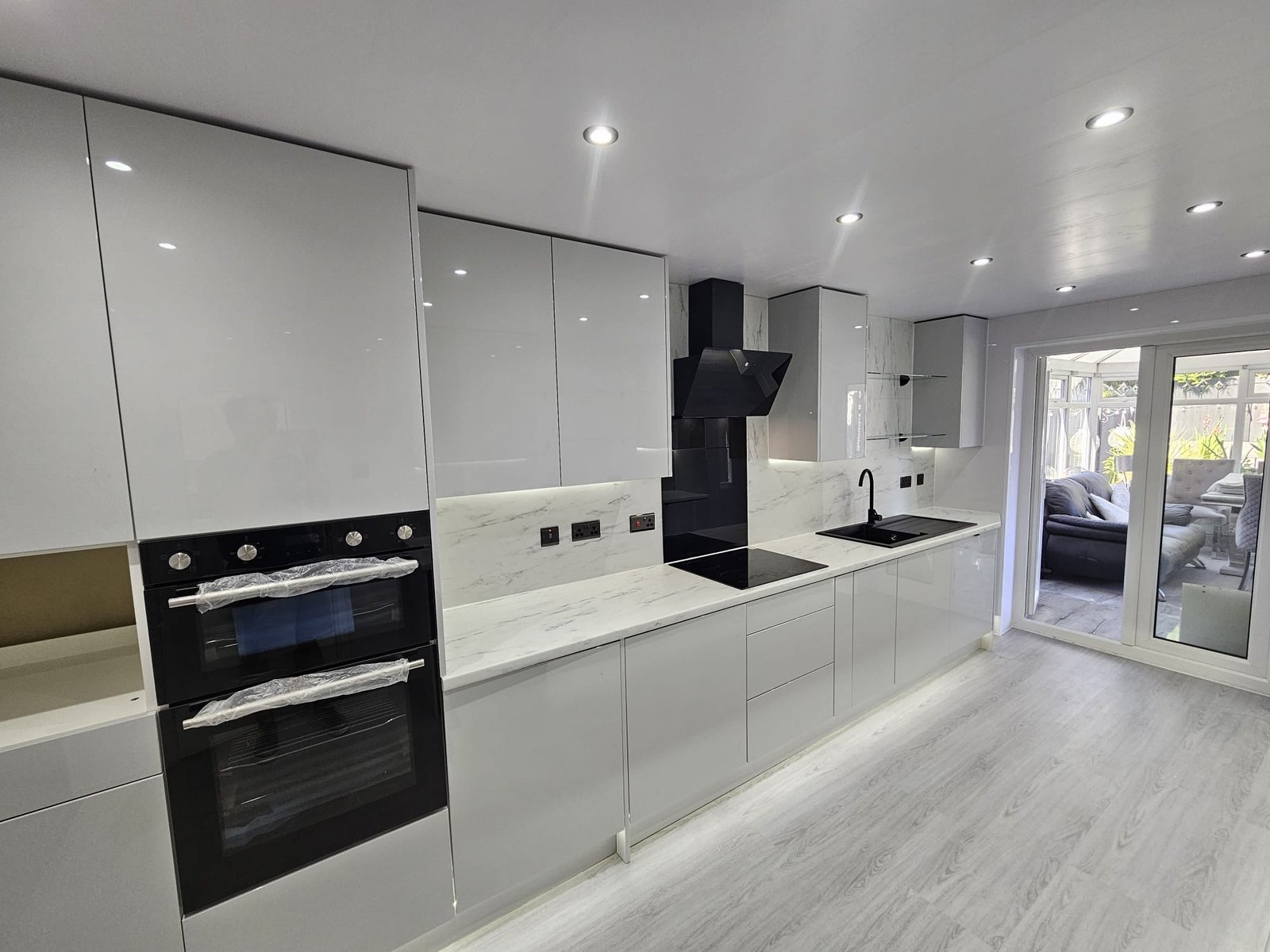
Cabinet rhythm, worktop depth, lighting and the space around an island matter as much as the individual products. We plan them as one interior.
My Renovation Masters“Luxury is not adding more. It is making every decision feel intentional.”
Discuss your room ↗︎
Useful project information, design guidance and related services are connected throughout the site so you can move from early research to a room-specific quotation without losing context.